Shatavari: Getting to Know Your Herbal Allies
Key Takeaways
- Shatavari Overview: A revered Ayurvedic rasayana traditionally used to nourish and rejuvenate body-mind, balancing pitta and vata while supporting overall vitality and ojas in herbal practice.
- Reproductive Support: Shatavari is traditionally used as a reproductive tonic that may support fertility, reproductive fluids, and sexual vitality when combined with complementary Ayurvedic herbs.
- Ayurvedic Uses: Shatavari root may support digestive health, soothe the respiratory tract, calm nervous system vata, and restore harmony. Shatavari is commonly taken as powder, tablets, or in ghee.
Shatavari (Asparagus racemosus) is a plant that holds a special place in the heart of the Ayurvedic pharmacopeia. Thanks to its cooling, soothing, nourishing, and rejuvenating work throughout the body, shatavari effectively balances both pitta and vata. This sattvic herb is fundamental in Ayurvedic medicine and can be an ally to most everyone, and no herbal education or Ayurvedic tool kit is complete without it.
Perhaps best known as a powerful female reproductive tonic, shatavari is equally beneficial for men. And it is not limited to the reproductive system; it crosses into other organs and tissue layers, helping to bring overall health and balance throughout the body-mind.
What Is Shatavari?
Shatavari is in the wild asparagus family, hence its botanical name Asparagus racemosus. It is a beautiful plant with wispy, graceful stems and branches, thin, needle-like leaves, and delicate flowers.
But it is what lies below ground that has captured the reverence of Ayurveda for the past few millennia. Shatavari's herbal power lies in its many creamy-colored, thick, tuberous roots.
In fact, these roots are the inspiration behind its name: shat, meaning "one hundred," and avar, meaning "below," literally translates as "the plant that has one hundred roots below the ground."1
Shatavari Supports Women's Health
Shatavari has another translation. Vari can also be translated as “husbands,” giving shatavari the clever translation of “she who has one hundred husbands.”2 Indeed, this alludes to shatavari's reputation as a powerful reproductive tonic that, legend has it, a woman would have the passion and stamina to have one hundred husbands.3
Knowing this, it is no wonder that shatavari root is famous for its work in the female reproductive system. Its cooling, sweet, and unctuous qualities penetrate deeply into the reproductive layer, promoting fertility, and so much more.4 This makes shatavari root an ideal ally for women's health and one of the most trusted herbs in Ayurvedic medicine—and a growing body of scientific research agrees.
Of shatavari's many traditional uses, it can be called upon to support a healthy menstrual cycle, aid in a peaceful transition into menopause, (including hot flashes and emotional shifts common during menopause), and help support mothers during pregnancy, birthing, and nursing.5 (As always, please first consult your practitioner before incorporating shatavari into your daily routine while you are pregnant or nursing.)
Shatavari Supports Men's Health, Too
Gentlemen, rest assured, the benefits of shatavari are not limited to the female reproductive system. Thanks to those same properties that make shatavari a famous female tonic, it is equally beneficial for the male reproductive system.
In fact, shatavari has yet another translation, this time with men in mind. It is called “the many-heired,” hinting at its ability to support fertility, healthy reproductive fluids, and healthy sperm production.6, 7 Shatavari does especially well in traditional formulas when mixed with ashwagandha, mucuna, gokshura, and amla to address these intentions.
Benefits of Shatavari for Sexual Wellness and Rejuvenation
Regardless of gender, shatavari works to support healthy sexual desire. Considered a vajikarana, this type of herb goes way beyond supporting a healthy sexual appetite (which, shatavari does, for men and women).
According to Ayurveda, these herbs reinvigorate the sexual organs and revitalize the entire body. Within these organs resides the power to create life, and this embodies not only the ability to create a child, but also the capacity to renew one's own life and vitality—body, mind, and soul.8
Considering shatavari's ability to reinvigorate the entire person, it holds a significant role in the Ayurvedic apothecary as a rasayana, or rejuvenative herb. Rasayanas nourish and tone the whole body, while also reinforcing the immune system. In Ayurveda, immunity is strongly linked to a substance called ojas. Rasayanas strengthen ojas, thus giving the body strength, vigor, vitality, and overall juiciness of life.

Beyond Reproductive Health
As we have illustrated, shatavari is not limited to its work within the reproductive layers. From a modern perspective, shatavari is considered an adaptogenic herb, helping the body cope with physical and emotional stress. In addition, the health benefits of shatavari include antioxidant peroperties from steroidal saponins, or naturally occurring plant compounds.
Traditionally, it is also used to support digestive health, respiratory balance, and calm the body and mind. When looking at the doshas, its cooling, soothing, nourishing, and rejuvenating properties can be called upon to help balance pitta and vata in various organs and tissues.
Are you experiencing excess pitta in the digestive system? Shatavari can cool, soothe, and coat the mucous membranes in the stomach while also aiding the intestine's ability to respond to excess heat and acidity. A mixture can be made with shatavari, amla, manjistha, and kutki to soothe excess pitta in the belly and support overall digestive health.10
Or perhaps you are experiencing dry and overheated lungs? Shatavari can help by increasing moisture and alleviating the excess heat. A formula incorporating shatavari with licorice, vasaka, and a little neem is especially effective to reduce aggravated pitta in the lungs.11
Or maybe you have excess vata in majja dhatu, the sixth tissue layer in the body. Shatavari is there to help yet again, soothing excess vata in the mind and nervous system.12 Through this work in the mind, shatavari is even said to aid in love and devotion.
How to Take Shatavari Root
Incorporating shatavari into your herbal regimen is straightforward. Certified organic and sustainably grown, Banyan's shatavari can be effective when taken on its own or as part of an herbal formula.
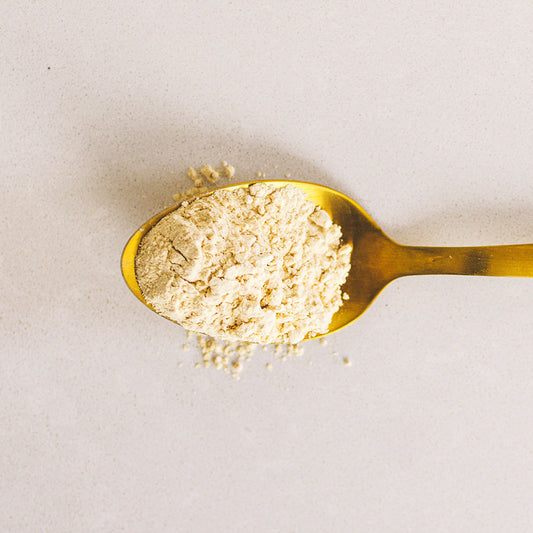
- Tea. It can be taken as a tea by simply adding shatavari powder to warm water. Its rasa (taste) is bitter and sweet, and it actually tastes good, making the powder easily platable.
- Tablets. Shatavari root powder is pressed into small tablets, which can be taken as part of your herbal supplements.
- DIY herbal blends. Many formulas that mix shatavari with other herbs to enhance its benefits. For example, it is often combined with ashwagandha, another reproductive tonic, and it does well with ashoka, rose, turmeric, and musta.9
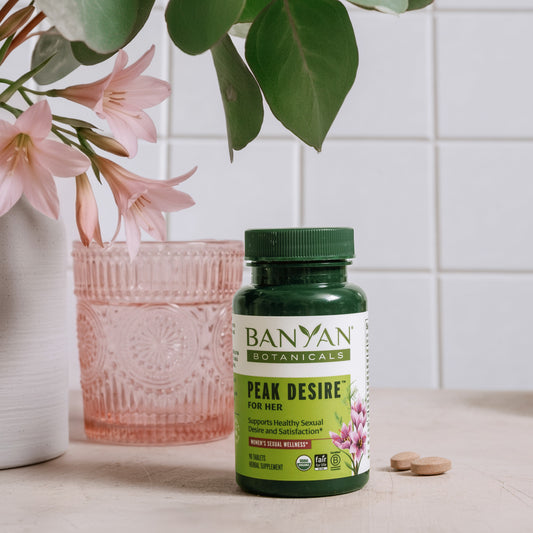
- Ready-made formulas. Shatavari can be found in many Banyan formulas, including Women's Support tablets, Menopause Balance tablets, and Peak Desire for Her, all of which leverage shatavari's work in the reproductive system. It is also in Stress Ease and Ashwagandha Latte, two adaptogen-packed blends to support stress resilience and replenishment.
- Herbal ghee. For deep rejuvenation, you can enjoy Vital Nourish Ghee, a traditional preparation that blends organic ghee with shatavari root.
Shatavari is generally considered beneficial and safe for most, although if you have elevated kapha dosha, you may want to avoid shatavari or take it in moderation. And, as always, if you have a medical condition, are working with a practitioner to address specific health problems, or are taking medications, it is recommended you consult with them before starting a new herb or formula.
Shatavari's work within the body-mind is truly inspirational, supporting women and men alike with its deeply nourishing and rejuvenating qualities and its uplifting sattvic energy. This is a dependable herbal ally that has more than earned its reputation in Ayurvedic herbology and is sure to keep its notoriety for years to come.

More for You
5 Research-Backed Benefits of Shatavari
Shatavari root is a well-known adaptogen that is best known in Ayurveda as the quintessential herb for the female reproductive system, and its benefits are increasingly researched.
An Ayurvedic Guide to Breast Health
The breasts and changes in them can indicate potential imbalances. Here, we'll discuss basic breast anatomy, general breast health, and some breast beauty tips.
References
1 Sebastian Pole, Ayurvedic Medicine: The Principles of Traditional Practice, (London: Singing Dragon, 2013), 271.
2 Simon, David and Deepak Chopra. The Chopra Center Herbal Handbook. Three Rivers Press, New York; 2000. 73-75.
3 David Frawley and Vasant Lad. The Yoga of Herbs: an Ayurvedic Guide to Herbal Medicine. 2nd ed. (Twin Lakes: Lotus Press, 2001), 74.
4 Pole, 271.
5 “Shatavari (Asparagus racemosus).” LifeSpa, https://lifespa.com/ayurvedic-supplement-facts/shatavari/
6 Naveen Patnaik.The Garden of Life: an Introduction to the Healing Plants of India. (Madison: Doubleday, 1993), 48.