Ashwagandha (Withania somnifera) is one of the most well-known and widely used Ayurvedic herbs, and for good reason—versatile, with a long list of benefits, ashwagandha has more than earned its place in the Ayurvedic pharmacopeia, and it has become a staple in wellness routines around the world.
It is also gaining increasing attention among researchers and is fast becoming one of the most studied plants in modern science.
Ashwagandha is an adaptogenic herb, one that helps the body adapt to physical and mental stress. This ability plays a key role in many of ashwagandha’s recognized benefits and traditional uses, including its correlation with supporting better sleep, stress relief, muscular strength, healthy cognitive function, and sexual wellness.
Modern research has begun to validate what Ayurvedic practitioners have observed for thousands of years, with studies suggesting that ashwagandha can support the body in meaningful, measurable ways across stress and anxiety, sleep quality, physical performance, cognitive functions, and hormonal health.
The following studies provide a scientific lens interpreting how ashwagandha may support these areas of wellness.
Using Ashwagandha Extract vs. Whole Ashwagandha Root
Before diving into the research, it’s important to note that many modern clinical trials use standardized extracts to ensure consistent dosing. In particular, ashwagandha extracts typically standardize withanolides. While this ensures consistency, it does remove the full spectrum of a plant’s naturally occurring compounds. For example, ashwagandha root also includes:
- Alkaloids
- Sitoindosides
- Steroidal lactones
- Flavonoids
These compounds may contribute to adaptogenic activity through synergy, which is a common argument in botanical medicine. This idea is often described as the “entourage effect” or “phytochemical synergy.” In this view, all components of an herb play a role in its overall effect on the physiology.
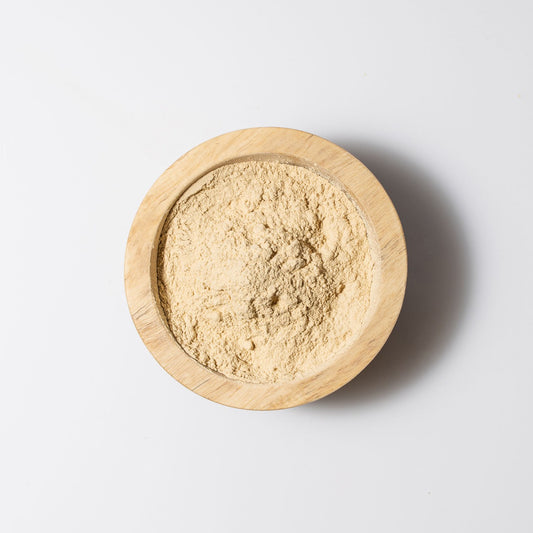
This certainly aligns with the traditional Ayurvedic approach to use the whole ashwagandha root powder, which contains all the plant has to offer.
In other words, scientific studies that use root extract don’t match the traditional form of ashwagandha, and they may not capture the full benefits of the herb. That said, these studies offer compelling insights on ashwagandha that are worth exploring.
Study 1: Ashwagandha and Stress Relief
Ashwagandha has been shown in clinical research to reduce cortisol levels, improve stress scores, and raise serotonin in adults with mild to moderate stress.
Stress isn't just a feeling. It's a physiological state driven by hormones, and cortisol is the stress hormone at the center of that response. When cortisol stays elevated, it affects sleep, immune function, weight, mood, and energy.
A 2023 randomized controlled trial measured not just how stressed participants felt, but what was actually happening in their bodies. The 60-day, randomized, double-blind, placebo-controlled study published in Medicine investigated the effects of standardized ashwagandha root extract on stress, anxiety, and stress hormone levels in healthy adults.1
Researchers divided 54 participants into two groups. One received 500 mg of ashwagandha root extract daily, the other a placebo. Stress and anxiety were assessed using the Perceived Stress Scale (PSS) and the Generalized Anxiety Disorder scale (GAD-7), alongside objective measurements of salivary cortisol and urinary serotonin.
The results were meaningful. It was associated with changes in biomarkers related to the stress response. The ashwagandha group showed significant improvements in both PSS and GAD-7 scores compared to the placebo group. Participants also showed greater reductions in morning salivary cortisol and increases in urinary serotonin. Quality-of-life scores improved significantly, and no serious adverse reactions were reported.
Study 2: Ashwagandha and Sleep Quality
Clinical trials show ashwagandha root significantly improves sleep quality, sleep onset latency, total sleep time, and sleep efficiency, with stronger effects in adults experiencing insomnia.
Sleep is foundational to every area of health, affecting mood, immunity, metabolism, cognitive performance, and physical recovery. While most supplement research relies solely on self-reported outcomes, this 2021 randomized, placebo-controlled study went further by adding objective, actigraphy-based measurements.
The double-blind, placebo-controlled study published in the Journal of Ethnopharmacology evaluated ashwagandha's impact on subjective sleep quality across two populations: healthy adults and adults diagnosed with insomnia.
80 participants were enrolled and split evenly. Each was randomized to receive either ashwagandha root extract or a placebo for eight weeks. Researchers used the Pittsburgh Sleep Quality Index (PSQI), actigraphy, and the Hamilton Anxiety Scale to objectively assess sleep.2
Both ashwagandha groups showed significant improvements compared to the placebo group, with stronger results in the insomnia group. The sleep measures that improved include:
- Sleep onset latency (the time it takes to fall asleep).
- Total sleep time over the course of the night.
- Sleep efficiency (the percentage of time spent in bed that is actually spent sleeping).
- Wake after sleep onset (to measure nighttime wakefulness).
Participants in the ashwagandha groups also reported better mental alertness on waking. The stronger results in the insomnia group suggest that Withania somnifera may be especially helpful for those who genuinely struggle with sleep.
Study 3: Ashwagandha and Muscle Strength
Research shows ashwagandha improves muscle strength, increases muscle size, and enhances VO2 max in adults following a resistance training program.
Ashwagandha is increasingly recognized in sports nutrition, not as a stimulant but as a recovery-support herb. A 2024 multicenter randomized controlled trial provided rigorous evidence, and notably included both men and women.
The eight-week, double-blind, placebo-controlled clinical study published in F1000Research investigated the effects of ashwagandha root extract on muscle size, strength, and cardiorespiratory endurance in participants following a resistance training program.
Participants received either 600 mg of standardized ashwagandha root extract (greater than 5 percent withanolides) or a placebo daily. Muscle strength was assessed on key lifts, muscle size was measured at multiple body sites, and cardiorespiratory endurance was evaluated via VO2 max testing.3
After eight weeks, the ashwagandha group showed significantly greater improvements across several performance measures compared to the placebo group:
- Muscle strength on key resistance training lifts.
- Muscle size in the arms and chest.
- VO2 max is a key marker of cardiovascular and respiratory endurance.
The inclusion of both male and female participants makes these results more broadly applicable than earlier ashwagandha studies that focused primarily on men.
Study 4: Ashwagandha and Cognitive Function
A 2024 randomized controlled trial found that ashwagandha improved episodic memory, working memory, executive function, and attention in healthy adults over eight weeks.
Brain fog, mental fatigue, and difficulty concentrating are common complaints that rarely get the research attention they deserve. This study was a welcome exception, focused on healthy adults rather than those with a clinical diagnosis.
The prospective, randomized, double-blind, placebo-controlled study published in the Journal of Psychoactive Drugs assessed the effects of ashwagandha root extract on cognitive functions, energy, and mood in 120 healthy adults aged 30 to 75 who reported self-perceived cognitive and energy difficulties.
Participants received either 600 mg of ashwagandha root extract or a placebo daily for eight weeks. Cognitive function was assessed using the Computerized Mental Performance Assessment System (COMPASS), a validated battery covering memory, attention, processing speed, and executive function.4
After eight weeks, the ashwagandha group showed significant improvements across several cognitive performance measures compared to the placebo group:
- Episodic memory and working memory.
- Executive function and information processing speed.
- Accuracy of attention and sustained focus.
- Mood state, mental fatigue, and vigor scores.
In Ayurvedic medicine, ashwagandha is classified as a medhya rasayana, an herb that nourishes the mind and supports mental function, as well as physical vitality. This research adds meaningful specificity to that ancient understanding.
Study 5: Ashwagandha, Testosterone, and Sexual Well-Being
A 2022 study found that ashwagandha significantly increased testosterone levels and improved sexual functioning scores in adult men with low sexual desire over eight weeks.
Hormonal health affects energy, mood, body composition, and vitality well beyond sexual function alone. Testosterone plays a role in muscle maintenance, bone density, cognitive sharpness, and motivation. Stress, poor sleep, and inflammation can all suppress healthy testosterone production. This is precisely where ashwagandha's adaptogenic and cortisol-lowering properties become relevant.
The eight-week, randomized, double-blind, placebo-controlled study published in Health Science Reports investigated the effects of ashwagandha root extract on sexual health and testosterone levels in adult males with lower sexual desire.
50 participants were randomly assigned to receive either 300 mg of ashwagandha root extract twice daily (600 mg total) or a placebo. Outcomes were measured using the Derogatis Interview for Sexual Functioning-Male (DISF-M), a validated tool assessing sexual thoughts, arousal, desire, and orgasm. Serum testosterone and prolactin levels were measured at baseline, week four, and week eight.
The findings were significant. Participants in the ashwagandha group showed a statistically significant increase in total DISF-M scores, indicating improved sexual functioning across multiple domains. Testosterone levels increased significantly. Prolactin levels did not change significantly in either group, suggesting the testosterone increase wasn't driven by altered prolactin signaling. Quality-of-life scores improved, and the ashwagandha extract was well-tolerated throughout the trial.5
What the Research Tells Us About Ashwagandha
As noted earlier, these studies use standardized extracts, not the whole root that is typically used in Ayurveda. More research using the whole ashwagandha root is needed to better understand how all active compounds work together to support the body and mind, as well as to help us understand how Ayurveda has long used ashwagandha in its whole form.
While this isn’t quite comparing apples to apples, thanks to the difference in the form of ashwagandha, these five studies suggest what Ayurveda has long known—that ashwagandha, as an adaptogen, works across interconnected systems to support a wide range of benefits, from supporting quality sleep to nurturing a healthy stress response.