

Which Is Better for Your Memory: Sex or Sudoku?
Key Takeaways
- Sex and cognition: Higher sexual satisfaction and emotional intimacy were linked with better memory, verbal fluency, and decision-making in older adults; quality mattered more than frequency.
- Whole-system health: Intimacy reflects vascular support, hormonal balance, stress regulation, emotional connection, and executive function; when these systems are in sync, the brain may benefit too.
- Intimacy rituals: Eye contact, foot rubs, shared breathwork, end-of-day check-ins, gratitude during hugs, gentle movement, and mindful body awareness can build connection and support calm, clear thinking.
Recent science suggests that your cognitive health and sexual health are intimately tied together.
Cognitive Health and Sex
When we talk about keeping our brains sharp, the usual suspects show up: exercise, leafy greens, Sudoku, sleep hygiene, maybe a bit of mindfulness.
All great ideas. But they leave something important out—something that might surprise you:
Sex.
Not just the act, but the quality of your sexual well-being and, more importantly, intimacy with yourself and others. These aren’t just “nice to have”—they’re biological barometers of how well your body and brain are working.
The core cognitive‑health principle here is relational attunement and enrichment, not sex itself. Sex can be a potent pathway.
Healthy intimacy reflects multiple systems humming in sync:
- Vascular health—how well your blood vessels deliver oxygen and nutrients to your brain and body.
- Hormonal balance—having your body’s chemical messengers (like thyroid, sex, and stress hormones) in a healthy, steady range.
- Stress regulation—your ability to calm your nervous system after stress so your body and brain can recover.
- Emotional connection—feeling seen, supported, and close to other people in your life.
- Executive function—your brain’s “CEO skills” for planning, focusing, organizing, and following through on tasks.1
When those systems are thriving, intimacy tends to follow. And—here’s the key—when intimacy thrives, the brain benefits.
That’s not just an opinion. That’s data.
A 2023 study published in The Gerontologist followed 1,683 adults between the ages of 62 and 90. What they found was clear:
Higher sexual satisfaction and emotional intimacy were linked with better cognitive performance—especially in memory, verbal fluency, and decision-making.2
And this wasn’t about frequency. It was about quality—of the experience, the connection, the relationship.
So if that’s true for people in their 70s and 80s, it’s probably good for younger folks too.

This Isn’t Just New Science—It’s Ancient Wisdom
According to the Āyurveda, the indigenous medicine of India, sexual well-being is considered a vital sign—a reflection of your entire internal ecosystem. When your energy is depleted or your systems out of sync, one of the first areas to shift is your intimate life.
In that view, sexual decline isn’t “just aging”—it’s feedback. And it deserves attention.
Today’s neuroscience is finally starting to echo what holistic systems have long taught: sexual health is whole-system health.
We tend to separate sex from health. But your brain doesn’t.
A fulfilling sex life supports brain function. It regulates mood, improves sleep, enhances memory, and deepens human connection—all vital to cognitive longevity.
So yes—eat your greens. Get your steps. Do the crossword.
But also, don’t overlook your intimacy.
It’s not just about pleasure, It is about building and nourishing deep and complex connections with yourself and others.

Intimacy Rituals (That Go Beyond Sex)
To be clear, vibrant cognitive health is absolutely available in seasons without a sexual partner.
Not every act of intimacy happens in the bedroom. In fact, some of the most brain-supportive rituals are simple, everyday moments that nourish emotional safety and relational attunement—key elements in the sex-cognition link.
These rituals aren’t about performance—they’re about presence. And presence is what your brain thrives on.
Here are a few non-sexual rituals to explore, either with a partner or solo:
- Intentional eye contact: Sit face-to-face with a friend or partner and share 60 seconds of uninterrupted eye contact. It can feel awkward at first—but this small practice increases oxytocin, trust, and emotional attunement.3
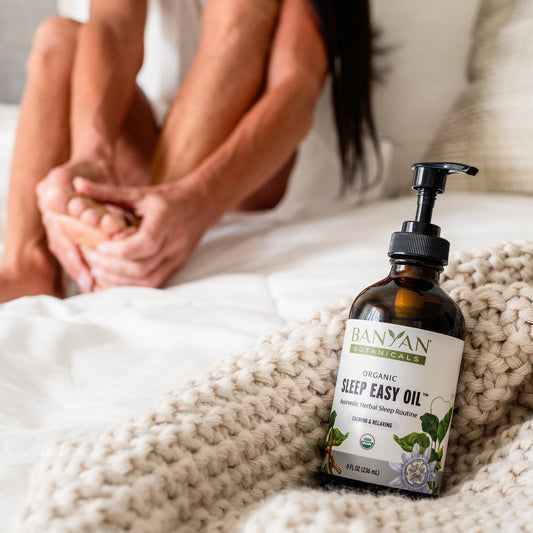
- Evening foot rubs: Grounding and stress-reducing, gentle touch (without expectation) helps regulate the nervous system and releases feel-good neurotransmitters like dopamine and serotonin. Try Sleep Easy Oil to further support your evening routine.4
- Shared breathwork: Just 2–5 minutes of slow breathing together (inhale 4, exhale 6) can sync heart rhythms and calm the mind—enhancing both emotional intimacy and cognitive clarity.
- "End of day" check-ins: Ask, “What was something that lit you up today?” or “Where did you feel off balance?” Creating safe space for reflection builds emotional intimacy and strengthens executive empathy—yes, that’s a thing.
- Gratitude in touch: While hugging, say one thing you appreciate about the other person. It shifts the nervous system into safety and reinforces connection.
- Gentle exercise: Choose movement and brief aerobic activity that feels great. Trusting the pleasure principle in simple movements (like a yoga practice or dancing) supports neuroplasticity, and improves mood and executive function.
- Mindfulness and simple body‑awareness practices: A few minutes of breathing with a hand on your heart or a part of your body where emotion or grief may be held is a readily available form for self-intimacy.
- Affectionate touch and emotionally safe connection: Cuddling your kids, hugging a friend, caring for a pet, and honest conversations engage the same bonding and calming systems we often talk about in the context of sex.
About the Author


More for You
What the Doshas Can Teach You About Your Relationships and Love Language
When it comes to romantic relationships, the doshas play a big role, influencing what you contribute, how you show affection, and how to find harmony with your partner.
Ayurveda and Mental Health | Connecting Mind, Body, and Soul
Ayurveda views the body, mind, and soul as one intelligent and interconnected system. Learn how to support all layers of your being from the very root.
References
1 Wahl D, Clayton Z. Peripheral vascular dysfunction and the aging brain. Aging (Albany NY). 2024; 16:9280-9302. https://doi.org/10.18632/aging.205877.
2 Riki E. Slayday, Tyler R. Bell, Michael J. Lyons, Teresa S. Warren, Rosemary Toomey, Richard Vandiver, Martin J. Sliwinski, William S. Kremen, and Carol E. Franz, “Erectile Function, Sexual Satisfaction, and Cognitive Decline in Men From Midlife to Older Adulthood,” The Gerontologist 63, no. 2 (March 2023): 382–94, https://doi.org/10.1093/geront/gnac151.
3 Bonnie Auyeung, Michael V. Lombardo, Markus Heinrichs, Bhismadev Chakrabarti, Anna Sule, J. B. Deakin, Richard A. I. Bethlehem, Laura Dickens, Niall Mooney, Jessica A. Sipple, Petra Thiemann, and Simon Baron-Cohen, “Oxytocin Increases Eye Contact during a Real-Time, Naturalistic Social Interaction in Males with and without Autism,” Translational Psychiatry 5, no. 2 (2015): e507, https://doi.org/10.1038/tp.2014.146.
4 Crystal Raypole, “Happy Hormones: What They Are and How to Boost Them,” Healthline, updated May 28, 2025, https://www.healthline.com/health/happy-hormone#massage.
Related Products
-
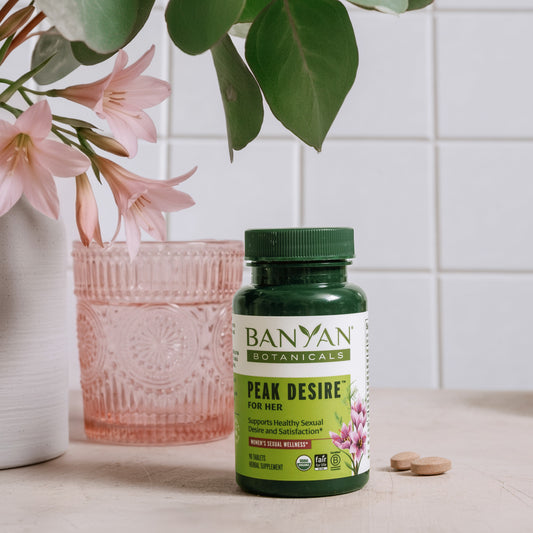
Peak Desire™ for Her
Supports healthy sexual desire, improved satisfaction, and overall sexual wellness*
Regular price $24.99Sale price $24.99 Regular priceUnit price per -
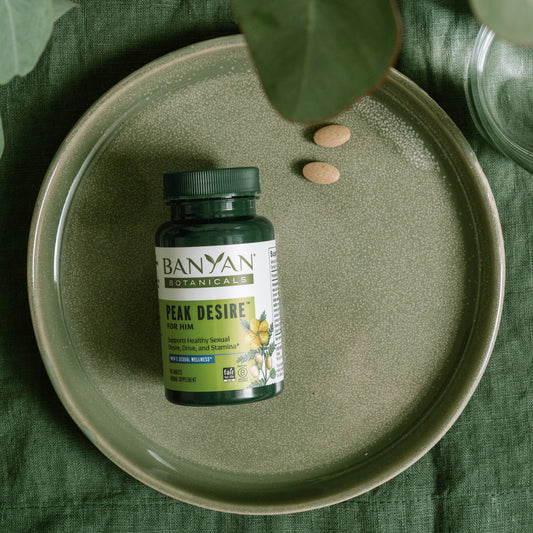
Peak Desire™ for Him
Supports healthy sex drive, stamina, performance, and overall sexual wellness*
Regular price $24.99Sale price $24.99 Regular priceUnit price per -
Sleep Easy Oil™
Soothing herbal massage oil to promote relaxation and deep, restful sleep
Regular price $29.99Sale price $29.99 Regular priceUnit price per -
Deep Love™ Plant Essence
Vibrational plant essence blend that fosters emotional harmony and a positive mood*
Regular price $17.99Sale price $17.99 Regular priceUnit price per





Your cart (0 items)
Get Started With These Products:
-
 Peaceful Mood Bundle$62.98
$69.97Regular priceSale price $69.97 Regular priceUnit price per -
 Oral Health Bundle$41.38
$45.97Regular priceSale price $45.97 Regular priceUnit price per -
 Glowing Face and Body Bundle$93.58
$103.97Regular priceSale price $103.97 Regular priceUnit price per -
 Hair Gloss & Growth Bundle$78.28
$86.97Regular priceSale price $86.97 Regular priceUnit price per


- Choosing a selection results in a full page refresh.
- Opens in a new window.